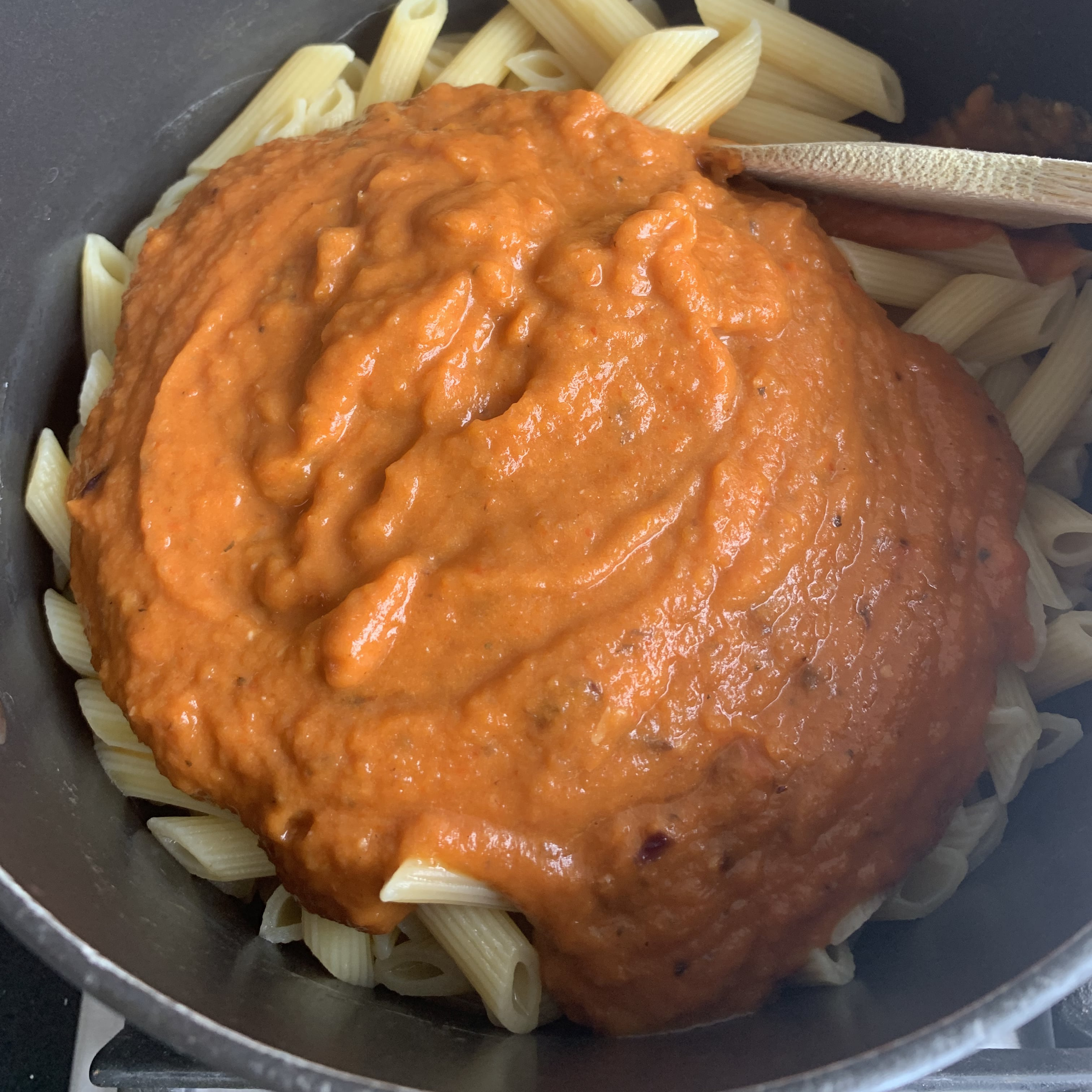
Most recipes for red pepper pasta sauce are basically tomato and red pepprt sauce, which isn’t much help if you are trying to avoid tomatoes and all the histamien within. So keep it simple and use more red pepper and no tomato.
Start by cutting the peppers in half and discarding the seeds and stalks and place in a roasting dish.
Peel the carrots and cut into 2-3 pieces and add to the roasting dish.
Peel the onion cut into quarters and add to the roasting dish.
Peel the garlic, (smash it with the side of a knife and pick the skin off).
Ad basil and oregano

Add a slug of vegetable oil and mix everythinga round, then put it in the oven for about 40 minutes on 200 degrees centegrade. You want the red peppers to blister but not burn.
Once the red pepper skins have blistered, remove from the oven and wrap the red peppers in cling film for 10 minutes, tip the other ingredients into a pan.
Peel the skin off the red peppers, this is incredably fidely, you can either rinse the peppers under a cold tap and tease the skin off, or try and pick at the edge of the skin and pull it away a bit like peeling an orange. Either way its worth doing, if you miss a bit it doesn’t matter, just get most of it.
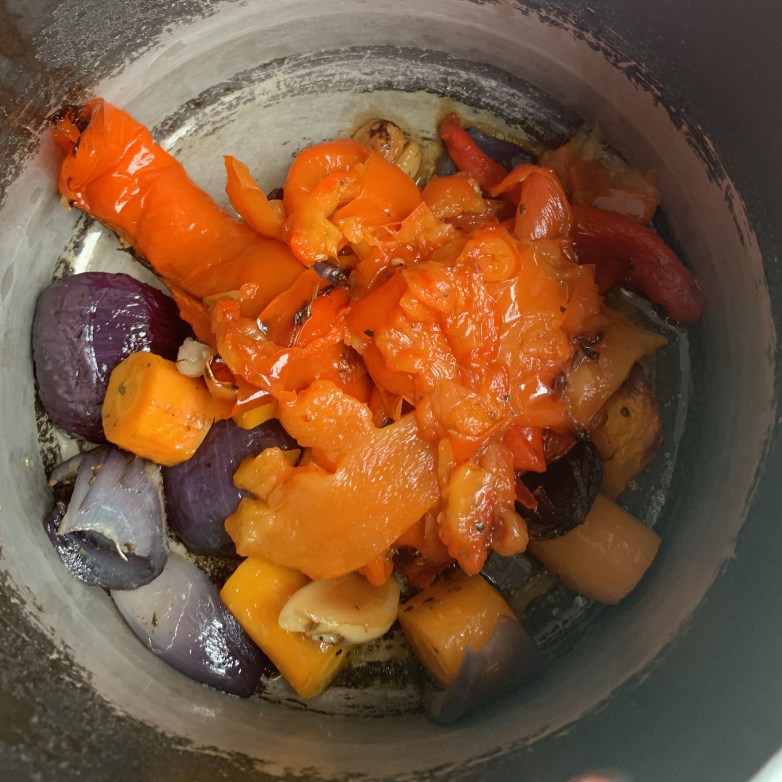
Add the peeled peppers to the pan, add a bout 100ml of water, if the pasta is cooking at the same time use a ladel full of the pasta water, it adds starch which thickens the sauce.
Add 1 teaspoon of dried oregano and 1 teaspoon of dried basil, use fresh herbs if you have them and add more than a teaspoon if you want. The challange of low histamine cooking is getting the depth of flavour so use more herbs than you think you need.
Simer for about 5 minutes, while you get the pasta cooking, and then blend to a sauce with a stick blender.
Finally add a slug of cider vinegar, (about 10ml), the acidity gives the sauce a sweetness that it otherwise lacks and compensates for the ‘missing’ tomato.
Cook the pasta, about 500g is enough, don’t add salt. Adding salt when cooking pasta does two thing:
1) it makes the pasta taste salty so you cannot tate the sauce – which is only a good thing if you make bad sauce,
2) it affects the stach gelatinization (pasta stickiness), as the salt concentration increases the gelation first reduces (making less sticky pasta) and then increases (making more sticky pasta). the exact inflection point depends on the water temperature and the chemical composition of the salt you happen to be using – so best thing to avoid stickiness is dont add salt, cook the pasta, drain it, add a slug of olive oil and swirl it about in a dry pan for a bit before adding the sauce.
- 4 red peppers
- 1 red onion
- 2 cloves garlic
- 2-3 carrots
- 1 teaspoon dried oregao (or more)
- 1 teaspoon dried basil (or more)
- Slug of vegetable/rapeseed oil
- Slug of cider vinegar
- 500g pasta (tagliatelle, fusilli or penne or whatever)
 72degrees